Some places don't belong to any category — they're simply marvels. Britain has a remarkable number of them: the world's first iron bridge at the gorge where the Industrial Revolution was born, a prehistoric circle that still baffles us, a rainforest under giant domes in a Cornish clay pit, a boat-lift that turns like a great wheel, and the extraordinary basalt columns of the Giant's Causeway. This is a guide to the country's greatest one-offs — ancient and modern, natural and made — gathered across England, Wales, Scotland and Northern Ireland.
Every marvel here carries an access note. The modern wonders (the Eden Project, Titanic Belfast, the Falkirk Wheel, the London Eye) are often superbly accessible; the ancient and natural ones (Stonehenge, the Giant's Causeway, Cheddar Gorge) vary, and we say honestly where the ground is rough or the going steep. Access details change, so confirm with each site before you travel. This guide grows as we add marvels.
England
From Ironbridge and Stonehenge to the Angel of the North and Brunel's SS Great Britain.
Ironbridge Gorge

The world's first cast-iron bridge, in a valley of pioneering museums.
In this wooded Shropshire gorge, Abraham Darby smelted iron with coke and, in 1779, spanned the Severn with the world's first iron bridge — a World Heritage Site now filled with ten industrial museums.
Our tip The Iron Bridge is free to cross; Blists Hill Victorian Town is the star museum.
Visiting — good to know
Partial wheelchair access
The riverside towpath along the Severn is level, and the Iron Bridge itself can be reached from the town side on paved surfaces, but the site spreads for miles with museums linked by road and the valley sides are steep. There is no single step-free route round the whole gorge, so treat it as a series of separate stops rather than one walk.
For blind & low-vision visitors The World Heritage gorge spreads along the Severn with museums linked by road; the riverside towpath is level but the valley sides are steep and the river edge largely unfenced.
Sensory The gorge is calm and green with river sounds; individual museums can be busy (especially Blists Hill in season), but there is plenty of open riverside to step away to.
Access last checked 5 Jul 2026 — always confirm with the venue.
Worth watching
- Ironbridge Gorge, England: Blists Hill Victorian Town - Rick Steves’ Europe Travel Guide Rick Steves' Europe
- Ironbridge, England: Birthplace of the Industrial Revolution - Rick Steves’ Europe Travel Guide Rick Steves' Europe
- Blists Hill Victorian Town - A Living Museum of Victorian Life - IronBridge MemorySeekers
More Wikipedia
The Eden Project

The world's largest indoor rainforest under vast geodesic domes.
In a reclaimed clay pit, the Eden Project's futuristic biomes hold a steaming tropical rainforest and a Mediterranean world — a spectacular hymn to plants and sustainability.
Our tip The Rainforest Biome is hot and humid — dress in layers.
Plan your visit
- Opening
- From 23 May to 23 July 2026, site gates open at 09:45, ticket desks open at 10:00, last ticket-desk entry is 15:30, and Eden closes at 17:00. Eden is open most days, except 25 December, some days in January and February for essential maintenance and staff training, and occasional private-event closures.
- Admission
- General Ticket prices are adult £35.50 in advance or £39.50 on the day, student £32.00 in advance or £35.50 on the day, child age 5–15 £12.50 in advance or £15.00 on the day, and under-5s free. From 25 June to 1 September 2026, Great British Summer Savings prices are adult £31.06 in advance or £34.56 on the day, student £28.00 in advance or £31.06 on the day, and child £10.94 in advance or £13.13 on the day.
- Booking
- Advance timed-entry booking is strongly encouraged because entry is not guaranteed without it. All visitors, including people admitted free such as carers or personal assistants and under-5s, need an arrival time slot; visitors should arrive within 30 minutes of that slot. Annual and Locals' Passholders must pre-book each visit, while Members and Patrons do not need to pre-book.
- Allow
- Allow approximately 4 hours for the indoor Biomes and outdoor gardens, according to the official planning page.
Visitor information checked 11 Jul 2026. Opening and prices can change.
Visiting — good to know
Partial wheelchair access Accessible parking Accessible toilets Changing Places toilet Assistance dogs welcome Companion goes free — all visitors
Eden occupies a former clay mine and has varied gradients. Most paths inside and outside the Biomes are tarmac, but some Wild Cornwall paths in the Outdoor Gardens are not wheelchair accessible. The accessible car-park route to the ticketing hall is just over 400 metres down a slope, mainly at 1:18 with a short section at 1:10. The upper floor of the Link building is accessible but decked and may feel bumpy for some mobility vehicles.
For blind & low-vision visitors Largely accessible with a level route and a land-train down into the crater; inside the biomes paths are firm but sloped and humid, and the planting gives strong scent and sound cues.
Sensory Can be very busy in holidays, and the biomes are warm, humid and echoey with dense planting and sound — sensory-rich; quieter early, with calm outdoor gardens.
Companion concession Personal assistants who help disabled visitors have no admission charge, but they still require a pre-booked ticket.
Access last checked 11 Jul 2026 — always confirm with the venue.
Worth watching
- When it rains at the Eden Project 💜🤣 #shortsvideo #shorts #travel #wheelchairlifestyle #cornwall Wheelie Fun Accessible Adventures
- THE EDEN PROJECT: How accessible is it? Are Dogs welcome? Wheelie Fun Accessible Adventures
- Hangloose Adventure Eden | Assisted Access Hangloose Adventure
More Tickets · Venue access information · Wikipedia
Also featured in Three days on the coast of Cornwall
Angel of the North

Antony Gormley's colossal steel angel watching over Gateshead.
Twenty metres tall with the wingspan of a jumbo jet, Antony Gormley's rust-red steel Angel has stood sentinel over the A1 at Gateshead since 1998 — an icon of the North East.
Our tip It's free and open all hours, right by the road.
Plan your visit
- Opening
- The Angel of the North is free to visit and is accessible 24 hours a day, seven days a week.
- Admission
- The Angel of the North is free to visit and is accessible 24 hours a day, seven days a week.
Visitor information checked 15 Jul 2026. Opening and prices can change.
Access not yet checked — please confirm with the venue before you travel.
Worth watching
More Wikipedia
Stonehenge
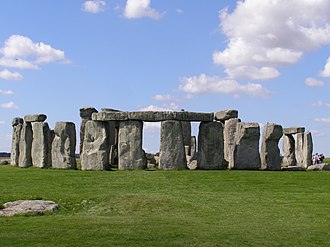
A 5,000-year-old ring of colossal standing stones on Salisbury Plain.
Raised over centuries from around 3000 BC, Stonehenge's great sarsen ring and bluestones — hauled from Wales — still guard their mysteries of ritual, astronomy and engineering. World Heritage.
Our tip Book timed tickets; a shuttle runs from the visitor centre to the stones.
Memberships and passes
- English Heritage — entry included: English Heritage and National Trust members receive free admission; advance time-slot booking is essential. Official terms (checked 21 Aug 2026)
Visiting — good to know
Step-free / wheelchair access Accessible toilets
For blind & low-vision visitors A firm, largely level circular path runs around the stones (viewed from a short distance), with an accessible visitor centre, shuttle and audio guides; the ground is grass-edged and exposed.
Sensory The visitor centre and shuttle can be busy, but the stones themselves are on open, windy grassland — airy rather than enclosed; early/late slots are quietest.
Access last checked 5 Jul 2026 — always confirm with the venue.
Worth watching
- Stonehenge England | Accessible Route is open ♿️ Wheelchair_World_Traveler
- How Disabled Accessible is Stonehenge? I am Melissa Ashley
- A 360° View of Stonehenge English Heritage
More Wikipedia
Also featured in Wiltshire
Avebury Stone Circle

A vast Neolithic henge you can walk among, wrapped around a village.
Older and far larger than Stonehenge, Avebury's great bank and ditch enclose the biggest stone circle in the world — and a whole village — with the mysterious Silbury Hill nearby.
Our tip Unlike Stonehenge, you can walk right up to and among the stones.
Memberships and passes
- National Trust — entry included: National Trust members receive free entry to the Alexander Keiller Museum and free parking; stone circle is free to explore. Official terms (checked 21 Aug 2026)
Visiting — good to know
Partial wheelchair access
The stones stand in open, rough grassland with hidden dips and a large earthwork bank and ditch, so the circle itself is uneven underfoot and soft after rain. The village pavements and lanes are firmer and give a more level way to see part of the circle without crossing the grass.
For blind & low-vision visitors The stones stand in and around a village amid open, uneven grass and a great earthwork bank — you can walk among them, but the ground is rough with unfenced dips.
Sensory An open village-and-fields setting that rarely feels crowded — calm, rural and airy, with sheep, birdsong and room to roam.
Access last checked 5 Jul 2026 — always confirm with the venue.
Worth watching
More Wikipedia
Also featured in Wiltshire
Cheddar Gorge

A spectacular limestone canyon with show caves and Britain's oldest skeleton.
Britain's biggest gorge slices 137m into the Mendips, its cliffs looming over a road, show caves of stalactites, and the cave where 'Cheddar Man', Britain's oldest complete skeleton, was found.
Our tip The clifftop walk gives the best views; the caves are the family draw.
Plan your visit
- Booking
- Book your standard Day Ticket before midnight the day before you want to visit to secure the best price – we look forward to seeing you!
Visitor information checked 15 Jul 2026. Opening and prices can change.
Visiting — good to know
Partial wheelchair access
The Cliff-top walk can be muddy and slippery underfoot on wet days. Wear walking shoes/boots and clothing to suit the weather. Be careful at cliff-edges. There are some steep sections of the walk and much of the path is rocky in nature.
Sensory To ensure our guests have the best possible experience we now have sensory bags available. The bags contain ear defenders, fidget and squishy toys and are aimed at those with sensory sensitivities.
For D/deaf & hard-of-hearing At Cox’s Cave, guests can access the audio in English, with printed transcript booklets available in a range of foreign languages to support your visit.
Access last checked 15 Jul 2026 — always confirm with the venue.
Worth watching
- Explore Britain's Largest Gorge | Cheddar Gorge Running Tour Craig Bridges
- Cheddar Village, Gorge & Caves: Complete Tour Nicola Explores
- Walking Cheddar Gorge Clifftops and Cheddar Village Tour MemorySeekers
More Wikipedia
Also featured in Somerset
SS Great Britain

The world's first great ocean liner, restored in her Bristol dry dock.
Isambard Kingdom Brunel's SS Great Britain was the first iron-hulled, propeller-driven ocean liner — now brilliantly restored in the Bristol dock where she was built, 'floating' on a glass sea.
Our tip Walk beneath the hull in the dry dock — a highlight.
Visiting — good to know
Step-free / wheelchair access
For blind & low-vision visitors The ship and museum are largely accessible with lifts and level routes, including beneath the 'glass sea'; some deck areas have edges and slopes — a strongly tactile, sound-rich visit.
Sensory An enclosed museum ship that can be busy and echoey below decks, with soundscapes and the dry-dock 'sea'; quieter early, sensory-rich throughout.
Access last checked 5 Jul 2026 — always confirm with the venue.
Worth watching
- Our visit to SS Great Britain in Bristol Our World For You (Janis & Gary)
- Exploring England’s Industrial Might at the SS Great Britain Rick Steves' Europe
More Wikipedia
Jodrell Bank Observatory

The vast Lovell radio telescope, a World Heritage Site of the space age.
The huge Lovell Telescope has scanned the heavens from the Cheshire plain since 1957, tracking spacecraft and quasars; now a World Heritage Site with an award-winning science centre.
Our tip Time a visit for one of the science talks or a live-music 'Bluedot' event.
Visiting — good to know
Partial wheelchair access
A largely level, firm site on the flat Cheshire plain, with the science pavilions reached by step-free routes. Some of the outer grounds and garden paths are grass or looser surfaces that are softer after rain, so the fully level experience centres on the pavilions and main paths.
For blind & low-vision visitors The site is largely level and firm with the great telescope as an audible, ever-turning landmark; the science pavilions are accessible and highly tactile and interactive.
Sensory Usually calm and spacious with open grounds; the science pavilions are interactive and can be lively with school groups, but there is plenty of quiet outdoor space.
Access last checked 5 Jul 2026 — always confirm with the venue.
Worth watching
- Jodrell Bank Travel Vlog | See the UK's Largest Telescope Rob on Holiday
- Jodrell Bank - A Full Tour Vlog Postcard And A Pint
More Wikipedia
Also featured in Cheshire
Blackpool Tower

A 158m Eiffel-inspired tower over the Golden Mile, with a glass Skywalk and ballroom.
Britain's best-loved seaside icon since 1894, the Blackpool Tower offers a glass-floored Skywalk high above the promenade and the sumptuous Tower Ballroom below.
Official information: Official website not yet identified.
Our tip The Tower Ballroom is a jaw-dropper even if you don't go up.
Visiting — good to know
Step-free / wheelchair access
For blind & low-vision visitors Reached from the flat promenade; the Eye lift is enclosed to a high glass floor (a real challenge without depth perception — keep to the solid edge), and the ballroom is grand and largely level.
Sensory Loud, bright and crowded — amusements, music and the busy promenade — a high-stimulation environment; the ballroom is calmer than the Eye and arcades.
Access last checked 5 Jul 2026 — always confirm with the venue.
Worth watching
- The Blackpool Tower Full Experience Tour | With The Tower Ballroom PT Vlogs UK
- The Blackpool Tower - How accessible is it? @TheBPLTower120 The Three Mouseketeers
More Wikipedia
The London Eye

A 135m observation wheel giving the finest views over the capital and the Thames.
Europe's tallest cantilevered observation wheel turns slowly above the South Bank, its glass capsules revealing Big Ben, the Thames and the whole sweep of London.
Our tip Book a sunset slot and pre-book to skip the queues.
Plan your visit
- Opening
- Open daily; summer (May–September) 10am–8.30pm, with entry stopping 30–45 minutes before closing. Closed Christmas Day and throughout January for annual maintenance; check hours before winter visits.
- Admission
- Adult from £29 online in advance (walk-up £39), child 2–15 from £26 (£35), under-2s free; online prices vary with demand. No discounted disabled ticket — the venue instead offers a free carer ticket. No car park; it signposts Q-Park Westminster (10% pre-booking code LONDONEYE) and the National Theatre car park.
- Booking
- Always cheaper online in advance. Timed slots mark when you join the queue, not boarding — waits can reach 45 minutes at peak. Wheelchair users should pre-book a dedicated wheelchair time slot (maximum 2 wheelchair users per pod, 8 on the wheel at once).
- Allow
- One rotation takes 30 minutes; allow up to 45 minutes of queueing at peak times.
Visitor information checked 11 Jul 2026. Opening and prices can change.
Memberships and passes
- Merlin Annual Pass — restrictions apply: Standard admission may be included, depending on pass type, restriction date and attraction rules. Pre-booking can be required; extras may cost more. Official terms (checked 8 Aug 2026)
Visiting — good to know
Step-free / wheelchair access Accessible toilets Companion goes free — all visitors
Boarding is step-free onto a slowly moving, enclosed capsule with room to sit and a solid floor; staff assist, though the South Bank approach is very crowded.
For blind & low-vision visitors Boarding is step-free onto a slowly moving, enclosed capsule with room to sit and a solid floor; staff assist, though the South Bank approach is very crowded.
Sensory One of the busiest, most crowded spots on the South Bank, with queues and noise; the capsule itself is quiet and calm once boarded.
Companion concession One free carer ticket per full-priced ticket, added during online booking (standard, Fastrack or multi-attraction). The disabled guest pays the normal price — there is no separate disabled discount. Proof accepted: One of: DLA or PIP letter, Attendance Allowance or Carer's Allowance letter, ESA or Incapacity Benefit documentation, Blue Badge, Certificate of Visual Impairment (CVI) or BD8 card, or a CredAbility Access Card with the +1 symbol; international equivalents accepted.
Access last checked 11 Jul 2026 — always confirm with the venue.
Worth watching
- London eye as a wheelchair user! Eliza Rain
More Tickets · Venue access information · Wikipedia
Also featured in Accessible London · UK Merlin attractions
Clifton Suspension Bridge

An elegant Victorian suspension bridge leaping the Avon Gorge at Bristol.
Isambard Kingdom Brunel's graceful chain bridge has spanned the dramatic Avon Gorge since 1864 — a symbol of Bristol, free to cross, with a visitor centre telling its story.
Our tip The viewpoints on either side give the best photos of the span.
Visiting — good to know
Partial wheelchair access
The bridge walkway is level and paved and can be crossed step-free from the pavements at either end. The surrounding Clifton streets slope moderately and the popular viewpoints on the downs above the gorge are reached over grass and gradients rather than surfaced level paths.
For blind & low-vision visitors The bridge has a level walkway but an open, exposed edge high above the gorge with traffic alongside — a serious challenge without depth perception; the viewpoints and visitor centre are safer.
Sensory Open and breezy with traffic noise on the bridge; the surrounding downs and viewpoints are calmer and quieter.
Access last checked 5 Jul 2026 — always confirm with the venue.
Worth watching
More Wikipedia
Wales
The soaring Pontcysyllte Aqueduct — a canal in the sky.
Pontcysyllte Aqueduct

Telford's breathtaking cast-iron aqueduct carrying a canal 38m above the Dee.
Thomas Telford's astonishing World Heritage aqueduct floats a narrow canal 38m above the River Dee on slender iron arches — you can walk or boat across the giddy trough.
Our tip Walk the towpath across for the thrill (there's a handrail on one side only).
Visiting — good to know
Partial wheelchair access
The canal basin and towpath approaches are level and surfaced, and the towpath over the aqueduct itself is flat but very narrow, with a handrail on one side only and the open water channel hard alongside. The level ground at the basin ends is the comfortable place to take it in; the crossing itself allows no room to pass or turn.
For blind & low-vision visitors Hazardous: the towpath crosses the aqueduct with a sheer, unfenced drop on the open side high above the valley — not safe for VI visitors without a guide; the basin ends are firmer.
Sensory Usually calm and rural with water and birdsong, though the exposed towpath crossing can feel intense; the canal basins are quieter.
Access last checked 5 Jul 2026 — always confirm with the venue.
Worth watching
More Wikipedia
Also featured in UK Canals, Aqueducts and Boat Lifts
Scotland
The Kelpies and the Falkirk Wheel — modern engineering as public art.
The Kelpies

Two 30m steel horse-heads rising beside the canal at Falkirk.
Andy Scott's colossal steel Kelpies — mythical water-horses — tower 30m over the Forth & Clyde Canal at Helix Park, gleaming and monumental, especially when lit at night.
Our tip They're free to see from the park; tours go inside the heads.
Visiting — good to know
Step-free / wheelchair access
For blind & low-vision visitors A level, firm, open parkland site right up to the giant horse-heads — easy to reach and touch the bases, the scale sensed by sound and touch; nearby canal edges are open water.
Sensory An open, breezy parkland that rarely feels crowded — calm and spacious, with the hum of the nearby motorway in the background.
Access last checked 5 Jul 2026 — always confirm with the venue.
Worth watching
More Wikipedia
The Falkirk Wheel

An extraordinary machine that lifts boats 35m between two canals.
A feat of modern engineering, the Falkirk Wheel rotates to carry boats 35m between the Forth & Clyde and Union canals — take a boat trip up and over on the wheel itself.
Our tip Ride the boat that goes up on the wheel — it's mesmerising.
Visiting — good to know
Step-free / wheelchair access Accessible parking
For blind & low-vision visitors Unusually accessible — level towpaths and step-free boat trips on the wheel itself; canal and basin edges are open water, so keep to the defined paths.
Sensory A calm, open canal setting; the visitor plaza can be busy in season but the towpaths and boat trips are relaxed and quiet.
Access last checked 5 Jul 2026 — always confirm with the venue.
Worth watching
- Accessible Cycling: Helix Park & The Falkirk Wheel Visit Falkirk
- Archimedes and a Boat Lift: the Falkirk Wheel Tom Scott
More Wikipedia
Also featured in UK Canals, Aqueducts and Boat Lifts
Northern Ireland
The basalt wonder of the Giant's Causeway and the story of Titanic Belfast.
Giant's Causeway

A World Heritage coast of hexagonal stone steps born of ancient volcanoes.
Some 40,000 interlocking basalt columns march into the sea on the Antrim coast — the legend says the giant Finn McCool built them; the geology says a volcanic eruption 60 million years ago. Northern Ireland's only natural World Heritage Site.
Our tip A shuttle bus runs from the visitor centre down to the stones.
Memberships and passes
- National Trust — entry included: National Trust members receive free admission to the visitor experience, exhibitions, and parking. Official terms (checked 21 Aug 2026)
Visiting — good to know
Partial wheelchair access
The visitor center is fully accessible; a wheelchair-accessible shuttle bus runs regularly down to the causeway path.
For blind & low-vision visitors The clifftop path and visitor centre are accessible with an audio guide and a shuttle down, but the basalt columns are uneven, wet, sloping and unfenced by the sea — the stones need a guide.
Sensory The visitor centre and shuttle can be very busy, but the causeway stones are open to wind and crashing sea — elemental and airy rather than enclosed; quieter early/late.
Access last checked 5 Jul 2026 — always confirm with the venue.
Worth watching
- The Giants Causeway Disability Wheelchair test ABLE Travel & Photo
More Wikipedia
Also featured in Causeway Coast road trip
Titanic Belfast

A striking museum on the slipway where the great ship was built and launched.
On the very spot she was designed, built and launched, this angular silver landmark tells the story of RMS Titanic across nine galleries — the world's leading Titanic visitor experience.
Our tip Read the access guide before booking if you want to use the Shipyard Ride or need a mobility scooter.
Visiting — good to know
Partial wheelchair access Accessible parking — see exact location below Accessible toilet — see exact location below Changing Places toilet Hearing loop Companion goes free — all visitors
The operator says circulation spaces and galleries are accessible. The Shipyard Ride has wheelchair size and weight limits, and mobility scooters cannot use its accessible car.
Accessible parking The operator lists six accessible spaces on car-park level -2 and four on level -1. Confirm the current parking arrangement before travel.
Accessible toilet The operator lists accessible toilets across the building and a Changing Places facility at the level -1 car-park entrance.
Shipyard Ride The accessible car takes one standard wheelchair at a time. Mobility scooters cannot use it, and the operator gives size and safety-bar limits. Read source (checked 3 Aug 2026)
For D/deaf & hard-of-hearing Audio exhibits have integrated loop systems. The operator asks hearing-aid users to switch to the T setting.
Companion concession A free carer ticket is offered to a paying visitor who needs essential assistance. The operator asks visitors to bring accepted proof of carer status. Proof accepted: Examples listed by the operator include a Health and Social Care Trust Carer ID Card, Blue Badge, Freedom Pass, DLA letter or PIP letter.
Access last checked 3 Aug 2026 — always confirm with the venue.
Worth watching
- Titanic Belfast - TripAbility Disabled Accessibility Overview Trip Ability
- 48 hours in Belfast with Lorcan VisitBelfast
More Venue access information · Wikipedia
Also featured in Accessible Belfast city break
Before you go
The marvels are a wonderfully varied day-out list, but they range from fully-accessible modern attractions to rough, ancient and natural sites — the access note for each is the thing to read before you go. Several (Eden, Titanic Belfast, the London Eye) reward pre-booking. And if one has caught your eye, open the planner to start shaping a trip around it — with your own access needs applied throughout.