Water shapes the loveliest parts of Britain, and its lakes and lochs are the heart of them: Wordsworth's English lakes, the quiet llyns of Wales, and the vast, deep lochs of the Highlands, some of them holding more fresh water than every lake in England and Wales combined. Better still for a gentle day out, many are ringed by level shore paths and served by old cruise boats, which make some of the grandest scenery in Britain genuinely easy to reach. This is a guide to the finest of them.
Every lake and loch here carries an access note. Where there's a level lakeshore path, a promenade or an accessible cruise we'll say so as the data lands; where we haven't confirmed it yet we say "not yet checked", never that a place is off-limits. Weather changes fast in lake country, so come prepared. This guide grows as we add lakes and lochs.
England
The Lake District's finest waters, plus Kielder and Rutland.
Windermere

Ten miles of shimmering water at the heart of the Lake District, alive with boats.
The largest natural lake in England, Windermere has drawn visitors for two centuries — cruise its length by steamer, or take in the classic view from Orrest Head.
Official information: Official website not yet identified.
Our tip Take a lake cruise from Bowness for the effortless way to see it.
Visiting — good to know
Partial wheelchair access
Level, surfaced promenades along the lakefront at Bowness and Waterhead, with step-assisted boarding onto the cruise boats. Away from these hubs the shoreline paths are unsurfaced and uneven.
For blind & low-vision visitors The lakeshore at Bowness and Waterhead has level, defined promenades and step-assisted cruise boats — among the more accessible lakes; the water's edge and jetties are open.
Sensory The busiest lake — Bowness and the piers bustle with crowds and boats in season; the water and quieter shores are calm, with gentle wave sound.
Access last checked 5 Jul 2026 — always confirm with the venue.
Worth watching
More Wikipedia
Ullswater

A serpentine lake beneath high fells, plied by Victorian steamers.
Often called England's loveliest lake, Ullswater snakes between fells where Wordsworth saw his 'host of golden daffodils'; the heritage steamers link some of the finest lakeside walks.
Our tip The Ullswater Steamers plus the Aira Force walk make a classic day.
Visiting — good to know
Partial wheelchair access
Level shore areas and step-assisted boarding at the Glenridding and Pooley Bridge piers, but much of the lakeside path is rough and uneven. The steamers are the easiest way to experience the lake without tackling the shore paths.
For blind & low-vision visitors Piers at Glenridding and Pooley Bridge give step-assisted 'steamer' access and level shore areas; much of the shore path is uneven, and the water edge is open.
Sensory Calmer than Windermere, with the sound of the steamers and lapping water; the piers can be busy but the lake feels tranquil and open.
Access last checked 5 Jul 2026 — always confirm with the venue.
Worth watching
More Wikipedia
Derwentwater

A island-studded lake ringed by crags above Keswick.
Set in a bowl of dramatic fells above Keswick, Derwentwater is scattered with wooded islands and served by a launch that hops between lakeside landings and the viewpoint of Friar's Crag.
Official information: Official website not yet identified.
Our tip Ride the launch and hop off at Friar's Crag for the classic view.
Visiting — good to know
Partial wheelchair access
Level, well-defined paths along the Keswick lakeshore, with step-assisted boarding onto the launch that hops around the lake. Paths further round the shore become rougher and uneven.
For blind & low-vision visitors Keswick's lakeshore has level, defined paths and a step-assisted launch stopping around the lake — a fairly accessible lake; jetties and the shore edge are open water.
Sensory A relatively calm lake with birdsong and gentle water; Keswick and the launch jetties get busy, the far shores stay peaceful.
Access last checked 5 Jul 2026 — always confirm with the venue.
Worth watching
More Wikipedia
Coniston Water

A long, quiet lake beneath the Old Man of Coniston.
Where Donald Campbell set water-speed records and Arthur Ransome set his tales, Coniston stretches beneath its shapely fell, cruised by the steam yacht Gondola and the Coniston Launch.
Official information: Official website not yet identified.
Our tip Sail on the restored steam yacht Gondola for a Victorian voyage.
Visiting — good to know
Partial wheelchair access
The shore at Coniston and the Gondola pier give level access with step-assisted boarding onto the boats. The wider shoreline paths are unsurfaced and uneven.
For blind & low-vision visitors The Coniston shore and the steam yacht Gondola pier give level, step-assisted access; the wider shore paths are uneven and the water edge is open.
Sensory A quiet, calm lake with the sound of water and the occasional steam yacht; rarely crowded away from the village.
Access last checked 5 Jul 2026 — always confirm with the venue.
Worth watching
More Wikipedia
Buttermere

A small, perfect lake with a flat, much-loved shoreline walk.
Cradled by high fells, Buttermere is many walkers' favourite for its beauty and its gentle, near-level circuit — one of the most rewarding easy walks in the Lakes.
Official information: Official website not yet identified.
Our tip The 4.5-mile shoreline circuit is largely flat and utterly beautiful.
Visiting — good to know
Not step-free
The famous 4.5-mile shoreline circuit is largely flat but mostly unsurfaced and uneven underfoot, with rough sections close to the water. There is no step-free surfaced route around the lake.
For blind & low-vision visitors A beloved low-level circuit, but the path is largely unsurfaced, uneven and close to open water in places — scenic yet not accessible; a guide helps on the shore.
Sensory A tranquil, low-key lake with birdsong and lapping water — calm and uncrowded outside peak weekends.
Access last checked 5 Jul 2026 — always confirm with the venue.
Worth watching
- Welcome To Buttermere Walk - Circuit of Buttermere - Lake District walks | United Kingdom Wajih Official UK
- Lake District Guided Walks: Buttermere Circuit Walking in the Wild | with Joe Jackson
More Wikipedia
Wastwater

England's deepest lake beneath its highest mountains and dark screes.
The deepest lake in England, Wastwater is hemmed by brooding screes and the peaks of Scafell Pike and Great Gable — a wild, austere grandeur voted Britain's favourite view.
Official information: Official website not yet identified.
Our tip The view up the lake to the Wasdale peaks is the classic shot.
Visiting — good to know
Not step-free
Rough, stony natural shore in a remote valley, with no surfaced paths or promenade. There is no step-free way to reach the water's edge.
For blind & low-vision visitors England's deepest, wildest lake has a rough, stony shore and no made promenade — dramatic but uneven and remote, with deep open water; not accessible.
Sensory Wild, remote and silent but for wind and water — a profoundly calm, elemental setting with few people.
Access last checked 5 Jul 2026 — always confirm with the venue.
Worth watching
More Wikipedia
Grasmere

A gentle lake beside the poet's village of Dove Cottage.
The little lake and village Wordsworth called 'the loveliest spot that man hath ever found', with Dove Cottage, his grave and the famous gingerbread shop close by.
Official information: Official website not yet identified.
Our tip Combine the lake with Dove Cottage and Sarah Nelson's gingerbread.
Visiting — good to know
Partial wheelchair access
The village streets and some nearby shore access are gentle, but the lakeside path is largely natural, unsurfaced and uneven. There is no step-free circuit of the lake.
For blind & low-vision visitors The village and some shore access are gentle, but the lake path is largely uneven and natural with open water at the edge.
Sensory The village is busy in season, but the lake itself is calm and quiet, with gentle water and birdsong.
Access last checked 5 Jul 2026 — always confirm with the venue.
Worth watching
More Wikipedia
Kielder Water

A vast reservoir in England's biggest forest and darkest skies.
Ringed by the enormous Kielder Forest under some of Europe's darkest skies, this huge reservoir offers a lakeside trail, an observatory and art dotted through the woods.
Official information: Official website not yet identified.
Our tip Stay for the stargazing — the skies here are exceptional.
Visiting — good to know
Partial wheelchair access
Firm, largely level, buggy-friendly lakeside trails run from the visitor hubs. The reservoir is vast, though, so the full shoreline route involves long distances and some gradients.
For blind & low-vision visitors England's largest reservoir has several firm, largely level, buggy-friendly lakeside trails and art stops — fairly accessible — though it is vast and the shore edge is open water.
Sensory Vast, calm and remote, with wind, water and forest sounds; busy only near the visitor hubs, dark-sky quiet elsewhere.
Access last checked 5 Jul 2026 — always confirm with the venue.
Worth watching
- Kielder Forest is beautiful but there's something you should know Towels Travels
- Look Local - Holding Water : Kielder Explained Radio Jonophone
More Wikipedia
Rutland Water

One of Europe's largest man-made lakes, ringed by a flat 25-mile trail.
A huge reservoir that's become a playground of sailing, cycling and birdwatching, ringed by a mostly flat traffic-free trail and home to ospreys and a half-submerged church.
Official information: Official website not yet identified.
Our tip The largely flat perimeter trail is superb for easy cycling.
Visiting — good to know
Partial wheelchair access
A firm, mostly flat, traffic-free perimeter track rings the reservoir, with level, well-defined stretches near the main hubs and step-assisted boarding onto the cruises. The full circuit is around 25 miles, so most visitors sample shorter sections.
For blind & low-vision visitors A large reservoir ringed by firm, level, well-defined cycle-and-walk paths and step-assisted cruises — one of the most accessible waters; the shore and dam edges are open.
Sensory A large, open reservoir that absorbs its visitors; generally calm with birdsong and water, busier near the cafes and cycle-hire.
Access last checked 5 Jul 2026 — always confirm with the venue.
Worth watching
- An Accessible Walk on the North Shore of Rutland Water with AccessTOG The Outdoor Guide with Julia Bradbury
More Wikipedia
Wales
The llyns of Snowdonia and the mid-Wales reservoirs.
Bala Lake (Llyn Tegid)

A four-mile lake below the Aran and Arenig mountains, with a little steam railway.
Llyn Tegid is the biggest natural lake in Wales, home to the rare gwyniad fish and a narrow-gauge steam railway that runs along its southern shore.
Official information: Official website not yet identified.
Our tip Ride the Bala Lake Railway along the water's edge.
Visiting — good to know
Partial wheelchair access
Largely level foreshore and lakeside access close to Bala town. Further along the shore the path becomes natural and uneven.
For blind & low-vision visitors The largest natural lake in Wales has a lakeside path and foreshore at Bala town — largely level near the town but uneven along the shore, with open water.
Sensory A calm, open lake with the sound of water and wind; Bala town gets busy in season, the shores stay peaceful.
Access last checked 5 Jul 2026 — always confirm with the venue.
Worth watching
- Bala A two minute tour Roberts and Daughter
- The Creation of Bala Lake/Llyn Tegid The Welsh Geologist
More Wikipedia
Llyn Padarn

A beautiful lake at Llanberis with a lakeside steam railway and slate heritage.
Framed by Snowdonia's peaks and the slate scars of Llanberis, Llyn Padarn is ringed by parkland and the Llanberis Lake Railway, with Dolbadarn Castle above.
Official information: Official website not yet identified.
Our tip The Llanberis Lake Railway runs right along the shore.
Visiting — good to know
Partial wheelchair access
Firm, largely level shore paths through the lakeside country park at Llanberis. Surfaces become rougher and more natural further along the shore.
For blind & low-vision visitors A lakeside country park with firm, largely level shore paths and a heritage railway alongside — fairly accessible — with open water at the edge.
Sensory A calm lakeside country park with the sound of the heritage railway and water; busier near Llanberis, quieter along the shore.
Access last checked 5 Jul 2026 — always confirm with the venue.
Worth watching
- Don’t Miss This Spot in Snowdonia! | Llyn Padarn Travel Guide Silent Travel movies
- Llyn Padarn Llanberis | Breathtaking 4K Drone Footage | DJI Mavic 3 Classic Motorhoming Fun.
More Wikipedia
Lake Vyrnwy

A brooding forested reservoir with a fairy-tale straining tower.
Built to supply Liverpool, Vyrnwy drowned a village beneath its dark waters; its Gothic straining tower and encircling forest make it one of Wales' most atmospheric lakes and an RSPB reserve.
Official information: Official website not yet identified.
Our tip The lakeside road and hides make for a peaceful wildlife day.
Visiting — good to know
Partial wheelchair access
A firm, largely flat estate road and path circles the reservoir and is popular with cyclists. Distances are long, so most visitors drive or ride between stopping points rather than walking the full circuit.
For blind & low-vision visitors A reservoir ringed by a firm, largely flat estate road/path (popular for cycling) — fairly accessible — with the dam and shore edges open to water.
Sensory A tranquil, remote reservoir ringed by forest — calm and quiet, with birdsong and water, rarely crowded.
Access last checked 5 Jul 2026 — always confirm with the venue.
Worth watching
- 🏴 Exploring Lake Vyrnwy's 19th Century Dam | Wales Virtual Walk Virtual Walks and Adventures
More Wikipedia
Llangorse Lake

A reedy Brecon Beacons lake with an ancient island dwelling.
The biggest natural lake in South Wales, in the Brecon Beacons, famous for its rare 'crannog' — a reconstructed Iron Age island dwelling — and its birdlife.
Official information: Official website not yet identified.
Our tip Look out for the reconstructed crannog island dwelling.
Visiting — good to know
Natural lakeshore with a shore access and boating area; the ground close to the water is uneven and marshy in places. There is no surfaced lakeside promenade.
For blind & low-vision visitors A natural lake with a shore access area and boating; the ground near the water is uneven and marshy in places, with open water at the edge.
Sensory A quiet natural lake with birdsong and gentle water; a small activity centre can be busy, but it is generally calm.
Access last checked 5 Jul 2026 — always confirm with the venue.
Worth watching
- Episode 1 Llangorse Lake Midlife Campervan Adventures
More Wikipedia
Scotland
The great Highland lochs — Lomond, Ness, Katrine and more.
Loch Lomond

Britain's largest lake by surface area, gateway to the Highlands.
Immortalised in song, Loch Lomond is the largest stretch of fresh water in Britain, its island-strewn southern reaches giving way to Highland peaks like Ben Lomond in the north.
Official information: Official website not yet identified.
Our tip Cruise from Balloch or Luss for the classic island views.
Visiting — good to know
Partial wheelchair access
Level, defined promenades at Balloch and Luss with step-assisted boarding onto the cruises. Beyond these visitor hubs the shore is wild, unsurfaced and uneven.
For blind & low-vision visitors Balloch and Luss give level, defined shore promenades and step-assisted cruises on Britain's largest loch — accessible in the honeypot spots; elsewhere the shore is wild and uneven.
Sensory Balloch and Luss bustle with visitors and boats in season; away from the honeypots the loch is calm, vast and tranquil.
Access last checked 5 Jul 2026 — always confirm with the venue.
Worth watching
- Accessible Photography - Lone tree of Loch Lomond Accessible Photography
More Wikipedia
Loch Ness
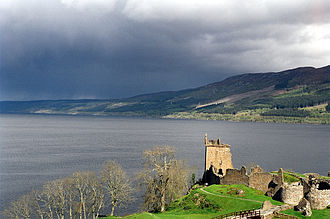
A vast, deep Highland loch of legend, holding more water than all England's lakes.
Long, deep and dark, Loch Ness holds more fresh water than every lake in England and Wales combined — and, so the legend goes, a monster; Urquhart Castle guards its shore.
Official information: Official website not yet identified.
Our tip Combine a cruise with Urquhart Castle for the full Nessie experience.
Visiting — good to know
Partial wheelchair access
Some level, defined shore access at the cruise piers and at Dores and Fort Augustus, with step-assisted boarding onto the boats. Much of the lochside is steep, wooded and uneven.
For blind & low-vision visitors Cruise piers and the Dores/Fort Augustus shores give some level, defined access and step-assisted boats; much of the shore is steep, wooded and uneven, with deep open water.
Sensory Cruise hubs and roadside stops can be busy, but the loch is largely calm, deep and still, with wind and water sounds.
Access last checked 5 Jul 2026 — always confirm with the venue.
Worth watching
More Wikipedia
Loch Katrine

A serene loch cruised by a Victorian steamship, the setting of Scott's poetry.
The jewel of the Trossachs and the inspiration for Sir Walter Scott's 'The Lady of the Lake', Loch Katrine is sailed by the century-old steamship Sir Walter Scott, with a flat shore road ideal for cycling.
Official information: Official website not yet identified.
Our tip The lochside road to Stronachlachar is flat and traffic-free.
Visiting — good to know
Partial wheelchair access
A firm, largely level and traffic-free lochside road runs from Trossachs Pier towards Stronachlachar, and boarding the steamship at the pier is step-assisted. Distances along the shore road are long.
For blind & low-vision visitors The Trossachs pier gives step-assisted steamship access and a firm, largely level lochside road/path — fairly accessible — with open water at the edge.
Sensory A tranquil Trossachs loch with the sound of the steamship and water; the pier can be busy, the shore road calm.
Access last checked 5 Jul 2026 — always confirm with the venue.
Worth watching
- Loch Katrine – The Trossachs National Park Beautiful Britain
More Wikipedia
Loch Awe

The longest freshwater loch in Scotland, guarded by Kilchurn Castle.
Scotland's longest freshwater loch stretches beneath Ben Cruachan, its most famous view the romantic ruin of Kilchurn Castle reflected in the water.
Official information: Official website not yet identified.
Our tip The view of Kilchurn Castle across the loch is unforgettable.
Visiting — good to know
Not step-free
Shore access is mainly from roadsides and small villages over natural, uneven ground in a remote setting. There are no surfaced lochside paths and no step-free route to the water's edge.
For blind & low-vision visitors A long Highland loch with roadside and village shore access that is largely natural and uneven; the water edge is open and the setting remote.
Sensory A long, quiet Highland loch — remote, calm and rarely crowded, with wind and water and the odd passing train.
Access last checked 5 Jul 2026 — always confirm with the venue.
Worth watching
More Wikipedia
Loch Maree

A loch of ancient pinewoods and islands beneath the peak of Slioch.
One of the most beautiful and unspoilt lochs in the Highlands, Loch Maree is scattered with wooded islands of ancient Caledonian pine beneath the great mountain of Slioch.
Official information: Official website not yet identified.
Our tip The view of Slioch rising over the loch is a Highland classic.
Visiting — good to know
Not step-free
A wild, remote loch with rough, uneven natural shores and no made paths or promenade. Not accessible for wheelchair users and hard going for anyone with limited mobility.
For blind & low-vision visitors A wild, remote loch with rough, uneven natural shores among ancient pinewoods — dramatic but not accessible, with open water and no made promenade.
Sensory A wild, remote loch among ancient pines — profoundly calm and silent but for wind, water and birds.
Access last checked 5 Jul 2026 — always confirm with the venue.
Worth watching
- Loch Maree Scotland | Hotel Loch Maree - Drone Flight Me, Her and GS - Motorbike Trips
- Loch Maree Islands | Hoolie 2024 | BBC ALBA BBC ALBA
More Wikipedia
Loch Tay

A long, deep loch below Ben Lawers with a reconstructed Iron Age dwelling.
Beneath the high Munro of Ben Lawers, Loch Tay holds the remains of ancient island dwellings, one recreated at the Scottish Crannog Centre on its shore.
Official information: Official website not yet identified.
Our tip Visit the Scottish Crannog Centre to step into the Iron Age.
Visiting — good to know
Partial wheelchair access
Largely level shore access close to the villages of Kenmore and Killin. The wider lochside is natural, unsurfaced and uneven.
For blind & low-vision visitors Shore access at Kenmore and Killin is largely level near the villages, with a crannog visitor attraction; the wider shore is natural and uneven, the water open.
Sensory Calm and open, busier near Kenmore and Killin in season; the wider loch is tranquil with water and wind sounds.
Access last checked 5 Jul 2026 — always confirm with the venue.
Worth watching
- Scotland Tour: Thatched Wooden Huts on the Loch — from 2,500 Years Ago Rick Steves' Europe
- Best Things to do at Loch Tay, Scotland | 4K Travel Vlog Ella McKendrick
More Wikipedia
Before you go
The gentlest way to enjoy a great lake is often from the water: cruise boats run on Windermere, Ullswater, Loch Lomond, Loch Katrine and Loch Ness, and turn the getting-there into the best part of the day. Many shore paths are level and easy; check each one's access note. And if you'd like to build a trip around a few, open the planner and shape it around how you travel — with your own access needs applied throughout.