Asia spans the full range of accessible travel, sometimes startlingly so. Tokyo and Singapore are among the most accessible cities on earth — spotless step-free metros, tactile paving everywhere, staff who materialise with ramps — while other destinations are a genuine adventure, with high kerbs, crowded streets and stepped temples. This is a guide to the continent's great destinations with an honest note on each, so you know which is which before you go. Most carry short films from wheelchair travellers who have been.
These are general destination notes, not venue-by-venue guarantees — confirm with the specific hotels, attractions and transport before you book. Where we haven't confirmed something we say "not yet checked". This guide grows as we add destinations.
East Asia
Among the most accessible destinations on earth — Japan, Korea, Taiwan and Hong Kong.
Tokyo, Japan

Japan's dazzling capital — neon districts, ancient shrines and impeccable public transport.
Tokyo is astonishingly accessible: lifts at almost every station, staff who lay ramps for boarding, wide pavements and accessible toilets everywhere.
Our tip Station staff will arrange ramp boarding — just show them your destination; it's seamless and free.
Visiting — good to know
Extensively step-free: lifts at nearly all stations, staff-assisted ramp boarding, wide pavements and plentiful accessible toilets. Older shrine precincts can have gravel/steps.
For blind & low-vision visitors A vast but remarkably orderly city with extensive tactile paving and largely accessible, well-signed transit — surprisingly navigable — though hugely crowded in the hubs.
Sensory An immense, high-stimulation city of crowds, lights and sound in Shibuya/Shinjuku, balanced by extraordinarily calm shrines, gardens and backstreets.
Access last checked 5 Jul 2026 — always confirm with the venue.
Worth watching
More Wikipedia
Also featured in Accessible travel around the world · Japan's Golden Route
Kyoto, Japan

Japan's old imperial capital — golden temples, geisha districts and raked-gravel gardens.
Kyoto blends historic temples with modern access; many sites have accessible routes, and the flat Philosopher's Path and main districts are rollable, though some temple grounds have gravel and steps.
Our tip AccessibleJapan and local guides map the step-free temple routes — worth planning around.
Visiting — good to know
Flat central districts and an accessible Philosopher's Path; individual temple grounds vary, with gravel and some steps.
For blind & low-vision visitors A calmer, lower city than Tokyo with many temples reached over gravel, steps and uneven ground; transit is fairly accessible, but temple grounds need care and a guide.
Sensory A serene city of temples, gardens and gravel — mostly calm and contemplative; the main sights and blossom season get very crowded.
Access last checked 5 Jul 2026 — always confirm with the venue.
Worth watching
More Wikipedia
Also featured in Accessible travel around the world · Japan's Golden Route
Hong Kong

A dense, dramatic city of skyscrapers, harbour and green peaks.
Hong Kong is hilly but its MTR is largely step-free with lifts, buses and the Star Ferry are accessible, and even Victoria Peak and the Ngong Ping cable car offer accessible routes.
Our tip The MTR and Star Ferry are accessible; Ngong Ping 360 has accessible cars for the big views.
Visiting — good to know
Hilly, but a largely step-free MTR, accessible buses and Star Ferry, and accessible cable-car options; steep streets and steps in older districts.
For blind & low-vision visitors A dense, vertical city with excellent accessible transit, tactile paving and elevated walkways, but intense crowds and steep areas; navigable but overwhelming.
Sensory An intensely dense, high-stimulation city of crowds, neon and noise; the harbour, parks and outlying islands offer surprising calm.
Access last checked 5 Jul 2026 — always confirm with the venue.
Worth watching
- Hong Kong, China Wheelchair & Disabled Accessibility Travel Guide by WheelchairTravel org Wheelchair Travel
- HONGKONG: NGONG PING 360 CABLE CAR IS WHEELCHAIR ACCESSIBLE / DISABILITY TRAVEL GUIDE Bernadette “BERN” Caberte
More Wikipedia
Seoul, South Korea

South Korea's dynamic capital — palaces, markets and mountains ringing a high-tech city.
Seoul is increasingly accessible, with a step-free subway (lifts at nearly all stations), accessible buses, and 'barrier-free' routes at palaces like Gyeongbokgung.
Our tip The subway has lifts at almost every station; look for the palaces' marked barrier-free routes.
Visiting — good to know
Extensive step-free subway (lifts at nearly all stations) and accessible buses; barrier-free palace routes, though some hilly historic areas are harder.
For blind & low-vision visitors A large, modern city with extensive accessible transit and tactile paving — fairly navigable — though hilly in places and very crowded in the hubs.
Sensory A huge, energetic city of crowds, markets and neon in the hubs, balanced by serene palaces, temples and mountain parks.
Access last checked 5 Jul 2026 — always confirm with the venue.
Worth watching
More Wikipedia
Osaka, Japan

Japan's kitchen — neon Dotonbori, a great castle and famously friendly locals.
Like the rest of Japan, Osaka is highly accessible: lifts at stations with staff-assisted ramp boarding, accessible Shinkansen, and step-free routes at Osaka Castle park and the aquarium.
Our tip Station staff arrange step-free boarding, including on the Shinkansen — just ask.
Visiting — good to know
Highly accessible: station lifts with staff-assisted boarding, accessible Shinkansen, and step-free routes at major sights.
For blind & low-vision visitors A large, orderly city with accessible transit and tactile paving — navigable — with crowded, lively entertainment districts and some hills.
Sensory A friendly, high-energy city famous for its loud, bright food-and-nightlife district (Dotonbori); calmer in the parks and castle grounds.
Access last checked 5 Jul 2026 — always confirm with the venue.
Worth watching
- Exploring Osaka as a wheelchair user (July 2024) Bethany Evans (Bethswheels)
- Visiting Kuromon Market in Osaka as a Wheelchair User - What It's Really Like? Wheelchair Travel
- Tempozan Ferris Wheel Wheelchair Accessibility Review ♿ Can Wheelchair Users Ride it? Osaka, Japan. Wheelchair Travel
More Wikipedia
Also featured in Japan's Golden Route
Taipei, Taiwan
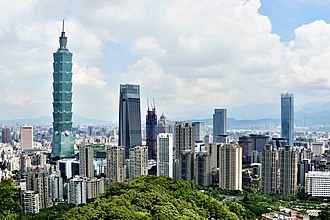
Taiwan's friendly capital of night markets, temples and Taipei 101.
Taipei is very accessible: a step-free metro (MRT) with lifts throughout, accessible buses, and lift access up Taipei 101 and at major temples and the zoo.
Our tip The MRT has lifts everywhere; Taipei 101's observatory is fully accessible by lift.
Visiting — good to know
Very accessible: step-free MRT with lifts throughout, accessible buses, and lift access at Taipei 101, major temples and the zoo.
For blind & low-vision visitors A modern city with excellent accessible transit, tactile paving and level modern streets — very navigable — though hot, humid and crowded in the night markets.
Sensory A friendly, orderly city — calm and modern by day, with lively, sensory-rich night markets of food, crowds and neon; temples offer incense-scented calm.
Access last checked 5 Jul 2026 — always confirm with the venue.
Worth watching
- EP 5 • Blind and Wheelchair Test: How Accessible is Taiwan? 🇹🇼 WHEEL AROUND THE WORLD
- Lawmakers Inspect Wheelchair Accessibility Issues at Taipei Main Station|TaiwanPlus News TaiwanPlus News
- Taipei Metro modifies trains for wheelchair, stroller access TVBS World Taiwan
More Wikipedia
Southeast Asia
The full range, from the smooth (Singapore) to the genuine adventure — with honest notes.
Singapore

A gleaming garden-city of futuristic architecture, hawker food and tropical greenery.
Singapore is widely rated among the world's most wheelchair-accessible cities — a step-free MRT, kneeling buses, wide level pavements and accessible attractions like Gardens by the Bay.
Our tip Almost everything is step-free; the MRT and buses are a joy to use.
Visiting — good to know
Among the world's most accessible cities: step-free MRT, kneeling buses, wide level pavements and accessible attractions.
For blind & low-vision visitors One of the world's most accessible cities — extensive tactile paving, step-free transit, level modern streets and wide pavements; highly navigable, though hot and humid.
Sensory A clean, orderly, modern city — generally calm, lively in the hawker centres and Gardens by the Bay light shows; warm and humid.
Access last checked 5 Jul 2026 — always confirm with the venue.
Worth watching
More Wikipedia
Also featured in Accessible travel around the world
Kuala Lumpur, Malaysia

Malaysia's high-rise capital — the Petronas Towers, vast malls and a food-lover's paradise.
KL's modern core is largely accessible, with step-free malls, an accessible light-rail spine and attractions like the KLCC park and Aquaria built for easy access.
Our tip The KLCC area — park, towers and Aquaria — is the most reliably step-free district.
Visiting — good to know
Modern, mall-linked core with step-free light rail and accessible attractions; older streets and kerbs can be patchy.
For blind & low-vision visitors A modern city of accessible malls and towers but uneven, broken pavements, big roads and heat between them — a guide helps outdoors; the modern hubs are level.
Sensory A hot, humid, busy city of traffic and bustling markets, with calmer modern malls and parks; the call to prayer marks the day.
Access last checked 5 Jul 2026 — always confirm with the venue.
Worth watching
- Underwater Shark Tunnel at Aquaria KLCC by WheelchairTravel.org Wheelchair Travel
- 車椅子で地下鉄 MRT: Kuala Lumpur Subway System クアラルンプール マレーシア Wheelchair Walker Yuriko Oda
- WHEELCHAIR PASSENGER, KLIA, MALAYSIA Rummon
More Wikipedia
Bangkok, Thailand

Thailand's electric capital — glittering temples, street food and buzzing markets.
Bangkok is busy and its pavements uneven, but the elevated BTS Skytrain has lifts at many stations, and specialist operators run accessible temple and market tours.
Our tip Use the BTS Skytrain (lift-equipped stations) and a trusted accessible-tour operator to skip the roughest streets.
Visiting — good to know
Uneven pavements and kerbs, but the BTS Skytrain has lifts at many stations and accessible tour options cover the temples and markets.
For blind & low-vision visitors A chaotic, crowded city of uneven pavements, obstructions and heat, with limited step-free transit; a guide is strongly advised, though the Skytrain helps.
Sensory A hot, loud, high-stimulation city of traffic, markets and street life; temples offer calmer, incense-scented refuge.
Access last checked 5 Jul 2026 — always confirm with the venue.
Worth watching
- WHEN PEOPLE ASK ME -WAS THAILAND ACCESSIBLE? #wheelchairlife #nolimits #thailand #accessibility VAHEN KING
- Wheelchair friendly Hotels Bangkok with Disabled Access WheelchairThailand “Accessible Thailand”
- ขึ้น BTS ด้วยรถเข็นไฟฟ้า ทำยังไง? ลองให้แม่เดินทางเองครั้งแรก รถเข็นไฟฟ้า วีลแชร์ไฟฟ้า Cruisemate
More Wikipedia
Also featured in Accessible travel around the world
Cambodia (Siem Reap & beyond)

Home of Angkor's temple-city and a warm, resilient culture rising from a hard history.
Cambodia is challenging but increasingly reachable: the world's first wheelchair-accessible tuk-tuks run in Siem Reap, and adapted tours open up Angkor and wildlife sanctuaries.
Our tip Book an accessible tuk-tuk and a specialist guide — it transforms what's possible at Angkor.
Visiting — good to know
Rough terrain and ancient temple steps, but accessible tuk-tuks and adapted tours now open up Angkor and the sanctuaries.
For blind & low-vision visitors Temple complexes like Angkor have vast, uneven, steep stone ruins and roots underfoot — hazardous and hard to navigate; a guide is essential, some causeways are firm.
Sensory Hot and humid, with the calm of the temples at dawn giving way to crowds; birdsong, monks and a slow, atmospheric pace.
Access last checked 5 Jul 2026 — always confirm with the venue.
Worth watching
More Wikipedia
Bali, Indonesia

Indonesia's 'Island of the Gods' — temples, rice terraces, beaches and warm hospitality.
Bali's pavements are poor and temples stepped, but accessible villas, private adapted-transport drivers and adapted tours open up much of the island, and the local willingness to help is a real asset.
Our tip Hire an accessible-transport driver and stay in an accessible villa — it transforms what's reachable.
Visiting — good to know
Poor pavements and stepped temple sites, but accessible villas, private adapted transport and beach options make much reachable with planning.
For blind & low-vision visitors A tropical island of uneven pavements, temple steps, rice-terrace paths and open drains — challenging and hazardous underfoot; resorts are more accessible, a guide helps.
Sensory A warm, sensory-rich island of incense, gamelan music, scooters and markets; the beaches, temples and rice fields are calm and beautiful.
Access last checked 5 Jul 2026 — always confirm with the venue.
Worth watching
- What no one tells you ! Bali in a wheelchair. WHEEL AROUND THE WORLD
- Inside a Wheelchair-Friendly Villa in Bali 🇮🇩 Hey Rick
More Wikipedia
South Asia
The great wonders of India — extraordinary, and honest about the crowds, kerbs and steps.
Agra & the Taj Mahal, India

Home of the Taj Mahal, the world's most beautiful mausoleum, on the Yamuna in northern India.
The Taj Mahal complex has ramps and a wheelchair-accessible route to the main platform (wheelchairs are provided), making the world's greatest monument reachable, though the wider city is chaotic.
Our tip The Taj provides wheelchairs and has a ramped route to the platform — arrange it at the gate.
Visiting — good to know
The Taj Mahal has ramps, provided wheelchairs and an accessible route to the main platform; the surrounding city is crowded and uneven.
For blind & low-vision visitors The Taj Mahal has some accessible routes and wheelchairs but marble platforms, crowds, heat and uneven approaches; the wider city is chaotic — a guide is essential.
Sensory Hot, crowded and intensely sensory in the city, with traffic and bustle; the Taj gardens are comparatively calm, especially at dawn.
Access last checked 5 Jul 2026 — always confirm with the venue.
Worth watching
- Enabling India: Accessible Taj NDTV
- Taj Mahal - Wheelchair Friendly or NOT || Must Watch WheelChair and Eye
More Wikipedia
Delhi & the Taj gateway, India

India's monumental capital of Mughal forts, bazaars and the gateway to the Taj.
Delhi is chaotic and uneven, but its Metro is famously accessible (lifts, ramps, reserved space) and the major monuments have accessible paths; hire adapted transport.
Our tip The Delhi Metro is a genuine accessibility win; use it plus an adapted-transport driver for the monuments.
Visiting — good to know
Chaotic and uneven streets, but a famously accessible Metro (lifts, ramps, reserved space) and accessible paths at Qutub Minar, Humayun's Tomb and the Red Fort.
For blind & low-vision visitors A vast, chaotic city of uneven, crowded pavements, traffic and heat, with some accessible metro; the great monuments have uneven ground — a guide is essential.
Sensory An intensely sensory megacity of traffic, horns, crowds and colour; the Mughal gardens, tombs and wide New Delhi avenues are calmer.
Access last checked 5 Jul 2026 — always confirm with the venue.
Worth watching
More Wikipedia
Before you go
In the smoother cities the metro is often your best friend; in the harder ones, a good local accessible-travel operator or a private accessible vehicle can transform a trip. Humidity and heat are worth planning around, too. And if somewhere here appeals, open the planner to shape a trip around it. For the wider world, see the full accessible-world guide.